


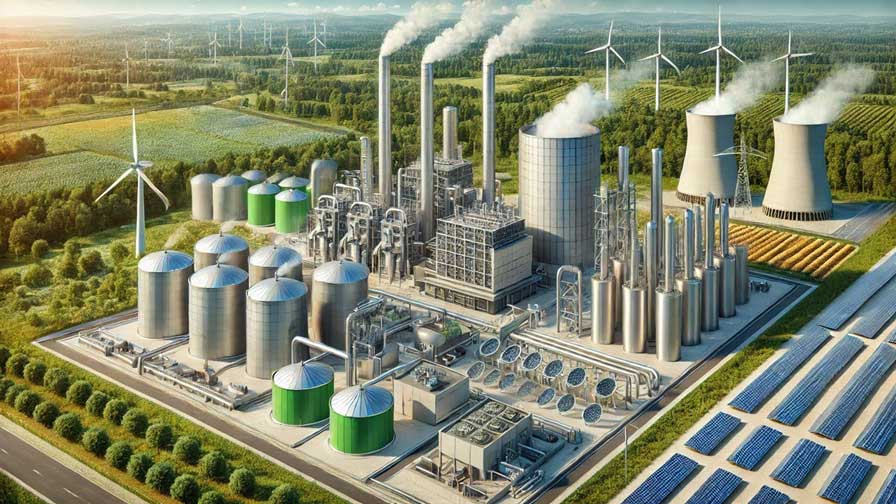
Biomass is a sustainable source for future energy
In the search for ways to meet the world’s energy needs with minimal environmental damage, renewable energies play a pivotal role. Among these clean sources, biomass stands out as one of the oldest yet most promising options. But what exactly is biomass, and how can it contribute to sustainable energy supply?
Biomass definition
Could you please specify what you would like me to do with this text? For example, would you like me to translate it, summarize it, or provide more information about it?
The main sources of biomass
The sources of biomass are very diverse and are generally divided into several main categories:
- Agricultural waste: This includes crop residues (like wheat straw and corn stalks), animal manure, and agricultural processing byproducts.
- Forestry waste: This includes tree branches and leaves, logging residues, and low-value or diseased trees.
- Energy Crops: These are plants specifically cultivated for energy production, such as sugarcane, corn, sorghum, and certain fast-growing tree species.
- Urban and Industrial Waste: This includes the organic fraction of household garbage, food industry waste, and sewage.
- Algae and other microorganisms: These have the potential for large-scale cultivation and conversion into energy.
How is biomass converted into energy?
Biomass conversion to energy occurs through various processes, each suited for a specific type of biomass and end goal (electricity, heat, or fuel production):
- Direct Combustion: The simplest method, where biomass is burned to produce heat. This heat can be used directly for heating or to generate steam and turn turbines for electricity production.
- Gasification: In this process, biomass is heated at high temperatures with limited oxygen to convert it into a flammable gas called “synthesis gas” or “syngas.” This gas can be used for electricity or heat production.
- Pyrolysis: Heating biomass in the absence of oxygen, which results in the production of liquid (pyrolysis oil), gas, and solid (biochar). The pyrolysis oil can be used as a liquid fuel.
- Anaerobic Digestion: The decomposition of biomass by microorganisms in the absence of oxygen, which leads to the production of biogas (a mixture of methane and carbon dioxide). Biogas can be used for electricity generation, heat, or as vehicle fuel. This method is particularly suitable for animal and municipal organic waste.
- Fermentation: The use of microorganisms (like yeast) to convert sugars and starches present in biomass (such as corn or sugarcane) into bioethanol, which is a liquid fuel.
The applications of biomass energy
Biomass energy has a variety of applications.
- Electricity generation: in biomass power plants using combustion, gasification, or biogas.
- Heat production: for heating buildings, industrial processes, or cooking (especially in rural areas).
- Production of biofuels: such as bioethanol and biodiesel for transportation.
Advantages of biomass energy
Using biomass as an energy source offers significant benefits:
- Renewability: Biomass is continuously available through the growth of plants and the production of waste.
- Carbon neutral (approximate): The amount of carbon dioxide released when biomass is burned is roughly equal to the amount absorbed by the plant during its growth. (Of course, this involves some complexities and depends on the complete production and consumption cycle).
- Waste reduction: Using agricultural, forest, and urban waste as an energy source helps manage and decrease the volume of waste.
- Local accessibility: Biomass sources are often available locally, which can reduce transportation costs and support the local economy.
- Storage capability: Unlike solar or wind energy, biomass can be stored and used to generate energy whenever needed.
Challenges and Considerations
Alongside its benefits, the use of biomass also presents challenges:
- Need for land: Growing energy crops may compete with food production for land.
- Environmental impacts: Unsustainable harvesting of biomass can lead to soil erosion or loss of biodiversity. Additionally, combustion can produce particulate matter and other pollutants that require control.
- Efficiency: Some methods of converting biomass into energy may have lower efficiency compared to fossil fuels.
- Cost of collection and transportation: Gathering and moving biomass from various sources can incur high costs.
Biomass in Iran
Iran, with its significant agricultural and livestock sector, as well as its potential in urban and forest waste, has considerable biomass resources. Developing the necessary technologies and infrastructure for sustainable utilization of these resources can play an important role in the country’s energy mix and reduce dependence on fossil fuels. Projects involving biogas production from livestock and urban waste, as well as the use of agricultural residues, are currently under review and implementation.
Conclusion
Biomass as a high-potential renewable energy source can play a significant role in providing sustainable energy and reducing environmental impacts. With proper resource management and the use of suitable conversion technologies, biomass can become an integral part of the future energy landscape for both the world and Iran. This transition can lead us toward a greener and more sustainable economy.