

From the heart of the river to the circuit of industry: the role of hydroelectric power plants in the future of global energy
In recent decades, attention to renewable energy sources has been increasing due to environmental concerns and the decline of fossil fuels. A hydroelectric power plant is considered one of the oldest and, at the same time, most efficient renewable electricity generation technologies. In this article, I will simply explain what a hydroelectric power plant is, how it works, what its advantages and limitations are, and what position it holds in today’s global electricity production.
What is a hydroelectric power plant?
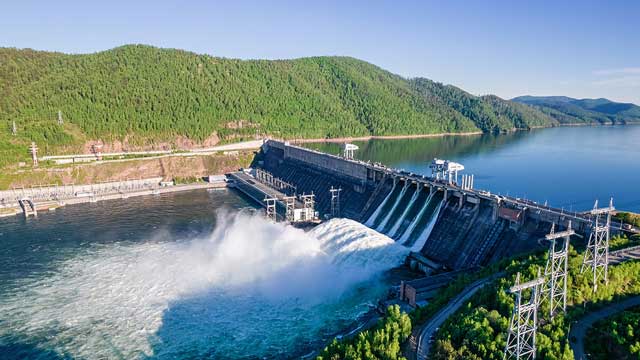
A hydroelectric power plant, or hydropower plant, is a facility that uses the energy of flowing or stored water in reservoirs to generate electricity. In many cases, the construction of a dam and the reservoir behind it creates elevation and water pressure, which then, when the water flows downward toward the turbines, converts its potential energy into kinetic energy and then into electrical energy.
Components and general operation
On a general level, the main components of a hydroelectric power plant are as follows:
- Reservoir or dam: to store water and create height difference
- Intake and penstock: to direct water toward the turbine
- Turbine: rotates and produces mechanical energy
- Generator: converts the turbine’s mechanical energy into electricity
- Control equipment and power transmission lines: for managing the flow and transferring electricity to the consumer grid
The process works as follows: water flows down from the reservoir, spins the turbine, the generator activates, and electricity is produced. The generated electricity is then transmitted through transformers to increase the voltage and deliver it to the grid.
Types of hydroelectric power plants
Hydroelectric power plants can be classified into several categories:
| Type | Main feature | Suitable for |
| Conventional dam type | Large reservoir with storage capability | Regions suitable for dam construction |
|
Run-of-river / diversion type |
River flow without large-scale storage | High-flow rivers |
| Pumped-storage type | Water is pumped during low-demand periods for use during peak hours | Hybrid systems combined with other energy sources |
For example, a pumped-storage hydroelectric power plant is used as a tool for balancing the grid during peak consumption hours.
Advantages of hydroelectric power plants
The main advantages of hydroelectric power plants include:
- Renewable and low-pollution source: generates electricity without emitting greenhouse gases during operation (except for construction impacts).
- Low operating cost: after construction, maintenance and operation costs are relatively low.
- Flexibility and fast response capability: able to adjust power generation during peak hours and network load fluctuations.
- Long lifespan: many hydroelectric plants can operate for several decades.
- Additional benefits: such as flood control, water storage, and recreational use of the reservoir.
Challenges and limitations
Although hydroelectric power plants offer many benefits, they also have limitations that must be considered:
- Dependence on water resources and climate change: during droughts or reduced rainfall, electricity generation may decrease.
- High initial investment cost: construction of dams, tunnels, and infrastructure is capital-intensive.
- Environmental and social impacts: dam construction can cause displacement of people, alteration of river habitats, and effects on fish and surrounding ecosystems.
- Dam safety risks: in case of design flaws or dam failure, serious hazards may occur.
- Methane emissions in large dams: in some reservoirs, a small amount of methane gas may be released due to decomposition processes.
The role of hydroelectric power in Iran and the current situation
In Iran, hydroelectric power has had a significant share in the country’s electricity generation mix. According to statistics, the capacity of hydroelectric power plants in the years 2021–2022 was about 12,188 megawatts. The number of active hydroelectric units in that period was reported as 59; however, due to reduced rainfall and climate change, the share of hydropower generation has decreased on certain days—so much so that during low-water conditions, hydropower may supply only about 5% of total electricity.
Conclusion
Hydroelectric power plants are one of the pillars of clean energy in both the world and Iran. Despite limitations such as climate change and high costs, their efficiency, flexibility, and low pollution have made them a vital option in many countries. In the future, integrating hydroelectric plants with other renewable sources such as solar and wind power can lead to a more stable electricity grid.