

Geothermal Power Plant: A Powerful Solution for Clean and Sustainable Electricity Generation
In the current era, where the demand for clean energy and sustainable development has peaked, renewable sources play a vital role in replacing fossil fuels. Among these sources,
What is Geothermal or Earth’s Heat Energy?
The word Geothermal is a combination of two Greek words: “geo” (Earth) and “therme” (heat). In short, geothermal energy is the inherent heat stored in the depths of the Earth’s crust and core, resulting from internal reactions and the decay of radioactive materials. This valuable resource can be used for electricity generation in geothermal power plants, direct heating of buildings, or even industrial processes such as water purification.
The Process of Electricity Generation in a Geothermal Power Plant
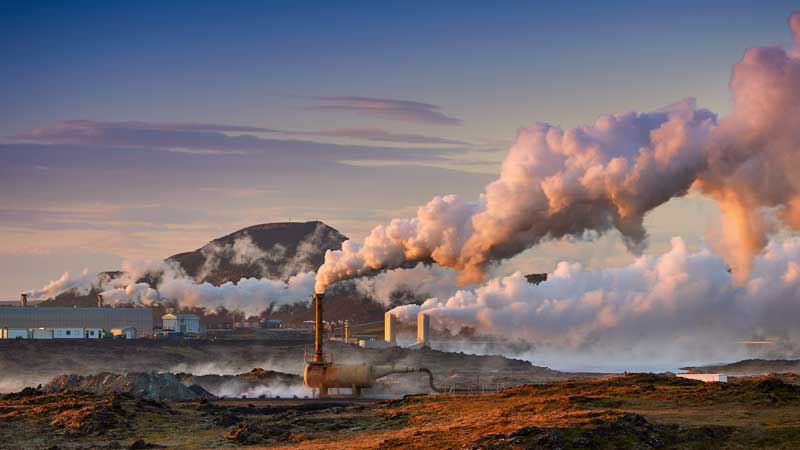
The main operation of a geothermal power plant is based on the extraction of hot fluids or steam from underground reservoirs through deep wells. This high-pressure steam is directed straight into the turbine, causing it to rotate. Connecting the turbine to the generator completes the process of converting thermal energy into electricity. In areas where reservoir temperatures are lower, the advanced technique of the Binary Cycle is usually used; in this method, the Earth’s heat is transferred to a working fluid, and this fluid produces the necessary steam to turn the turbine.
Key Components of a Geothermal Power Plant:
- Geothermal Wells: Access route to underground thermal reservoirs.
- Heat Exchanger: The function of transferring heat from the geothermal fluid to the working fluid.
- Turbine and Generator: The heart of the system for converting thermal energy into electrical energy.
- Reinjection System: Returning the cooled fluid to the reservoir to maintain resource sustainability.
- Control equipment and electricity transmission infrastructure.
Major Advantages of Geothermal Power Plants
- The growing importance of geothermal energy is due to its unique advantages:
- High Renewability and Sustainability: The Earth’s internal heat is considered an endless resource.
- Base Load Generation: Unlike solar and wind, a geothermal power plant has the capability to generate electricity 24 hours a day without interruption.
- Low Environmental Pollution: The rate of greenhouse gas emissions in this process is very negligible.
- Low Operational Costs: After the initial investment, maintenance and operating costs are cost-effective.
- High Energy Density: Occupies less space compared to other clean energies.
- Secondary Applications: Potential for direct use for district heating, pools, and greenhouses.
Challenges and Barriers to Geothermal Power Plant Development
Despite the impressive advantages, the development of geothermal power plants comes with challenges:
- Heavy Initial Investment Costs: Includes expensive drilling and procurement of heat-resistant equipment.
- Geographical Limitation: Development is concentrated only in areas with high geothermal activity potential.
- Mild Seismic Risks: Re-injection of fluids can lead to localized tremors.
- Resource Efficiency Decline: Over time, the temperature of some reservoirs may decrease.
Global Status and the Future of Geothermal Energy
Countries such as Iceland, New Zealand, Turkey, and the United States are pioneers in the use of geothermal energy. Turkey, with a capacity of over 2 gigawatts, holds the fourth position globally in the utilization of geothermal power plants. The development of novel technologies like Closed-Loop Geothermal systems makes it possible to benefit from this source even in areas lacking volcanic activity.
The Bright Outlook for Geothermal Power Plants
Given the global consensus on reducing dependence on fossil fuels and the increasing demand for clean electricity, a very bright horizon is envisioned for geothermal power plants. Investment in this sector not only strengthens the stability of the electrical grid but also helps reduce carbon emissions and develop infrastructure in remote areas.