

Nuclear Energy: The Driving Force for Sustainable Electricity Production and a Bright Future for the Global Energy Industry
In the contemporary world, grappling with increasing challenges such as population growth, rising energy demand, and the necessity to combat climate change, nuclear energy has emerged as a vital and effective solution for sustainable electricity generation. This advanced technology plays a pivotal role in meeting current energy needs and shaping the future of global energy.
The Basis of Electricity Generation in Nuclear Power Plants:
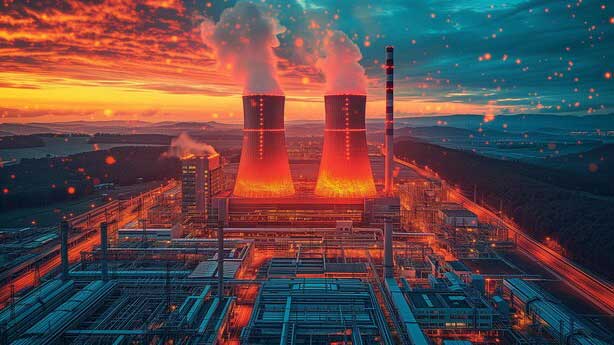
The basis of electricity generation in nuclear power plants is the process of “nuclear fission.” In this process, the nuclei of heavy atoms like Uranium-235, by absorbing a neutron, split into smaller nuclei. This splitting releases vast amounts of thermal energy. The heat produced converts water into high-pressure steam. This steam drives turbines connected to generators, consequently producing electricity. A significant point in this cycle is the absence of greenhouse gas emissions, such as carbon dioxide, during the electricity generation process, which makes nuclear energy a desirable option for reducing carbon footprint and combating global warming.
Advantages of Sustainability and Reliability:
One of the prominent advantages of nuclear energy is its high reliability and sustainability in electricity generation. Nuclear power plants can continuously produce electricity without dependence on variable weather conditions (such as solar radiation or wind speed). This feature ensures the stability and security of the electricity grid and plays a key role in the uninterrupted supply of energy for industries and domestic consumption. Furthermore, the volume of nuclear fuel required to produce significant amounts of electricity is much lower compared to fossil fuels, which greatly contributes to reducing the environmental impacts of resource extraction and fuel transportation.
Innovations and Advancements in Safety and Waste Management:
Despite past concerns regarding safety and nuclear waste management, significant advancements have been made in the design and operation of nuclear power plants. New generations of reactors, including Small Modular Reactors (SMRs), have minimized risk by utilizing passive safety systems and inherently safer designs. These innovations, along with stringent international regulatory protocols, have helped increase the level of safety and public acceptance of this technology.
Concluding Remarks:
Overall, nuclear energy, as an integral and strategic component of the global energy mix, is of paramount importance for achieving sustainable electricity generation goals and ensuring a secure and clean energy future. Investment in and development of this technology will not only meet growing energy demands but also pave the way for reducing reliance on fossil fuels and transitioning to a low-carbon energy system. This approach will be a significant step towards global environmental sustainability and collective well-being.